The surface

Built to be landed on

Rubber surfacing does a job resin cannot: it absorbs impact. That makes it the surface of choice under and around play equipment, on trim trails and anywhere a fall is likely.

We install both rubber EPDM wet pour and rubber mulch. Both are laid over a properly prepared base, both let water through rather than pooling, and both come in a range of colours — so a play area can be marked out, zoned or simply made to look like somewhere children want to be.

  • Impact-absorbing. Laid to a depth suited to the fall height of the equipment it sits beneath.
  • Permeable. Water drains straight through, so surfaces stay usable rather than turning into puddles.
  • Seamless and trip-free. Wet pour is trowelled as one continuous surface — no joints, mats or edges to catch a foot.
  • Colour and zoning. Multiple colours can be combined to mark out play zones, paths and areas within one space.
  • Low maintenance. No mowing, no bark to top up every season, and it does not blow or wash away.
Two surfaces

EPDM wet pour or rubber mulch

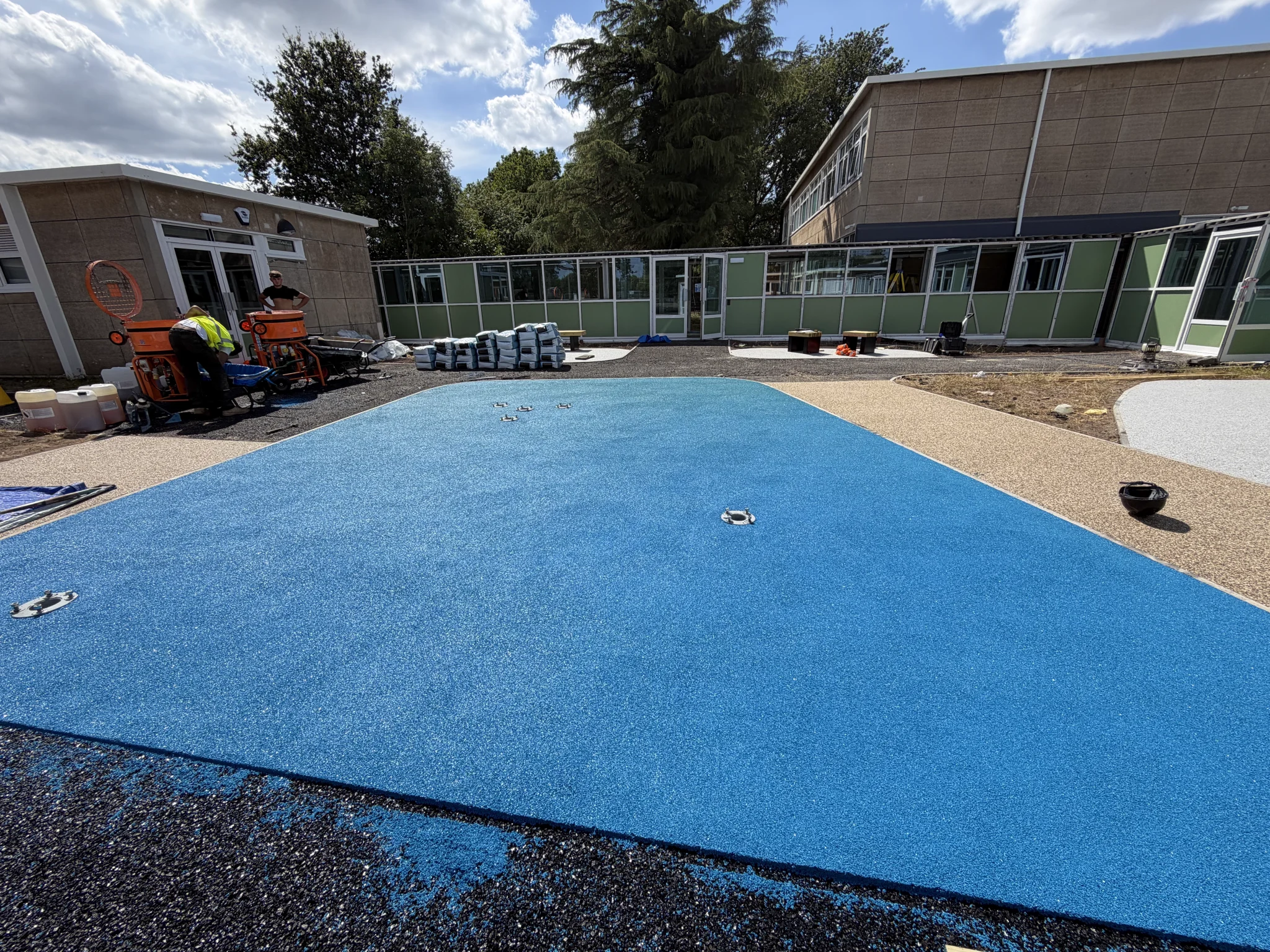
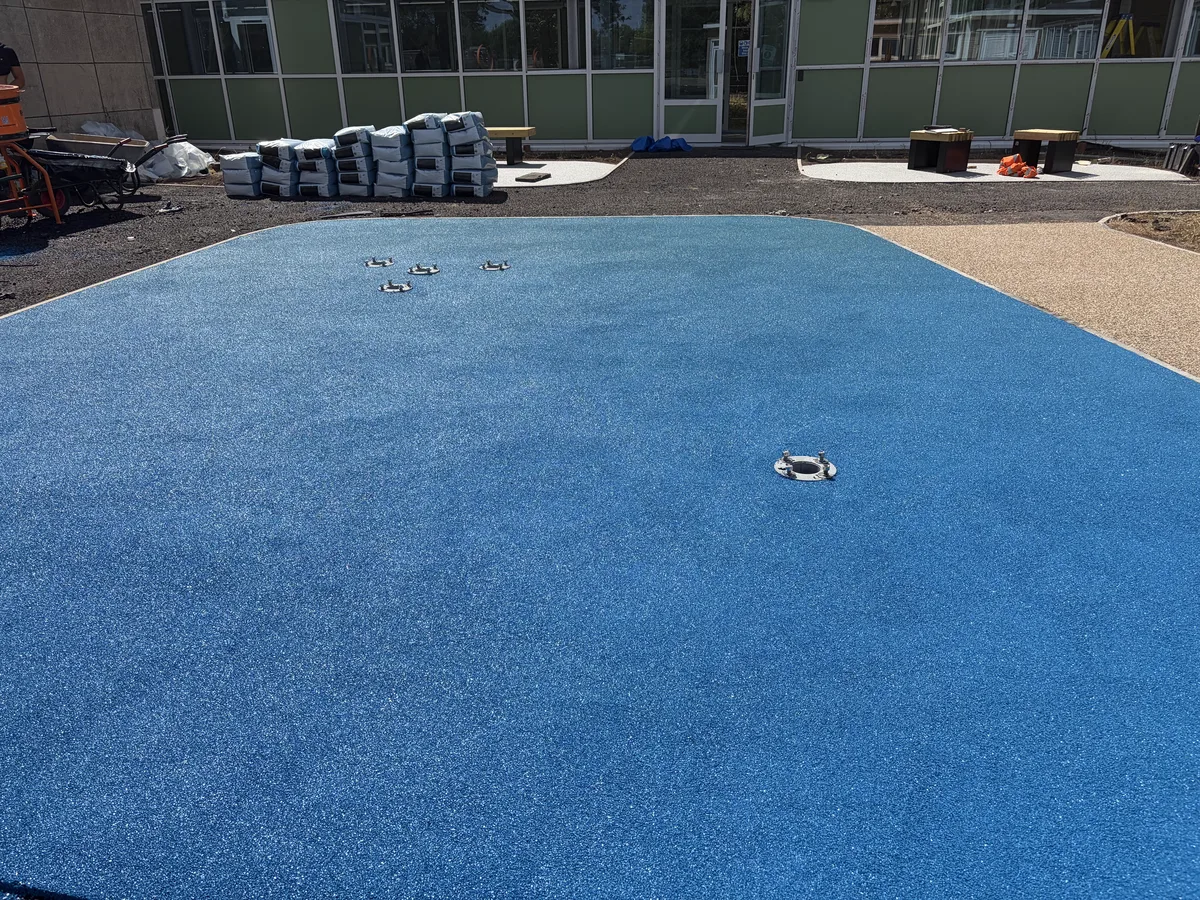
Blue rubber EPDM wet pour safety surfacing laid at a school by A&P Resin

Rubber EPDM (wet pour)

Rubber granules mixed with binder and trowelled on site into a smooth, seamless, spongy surface. The classic playground safety surface — bright, continuous, and laid to the depth the equipment needs. Best where you want a clean finish, defined shapes and strong colour.
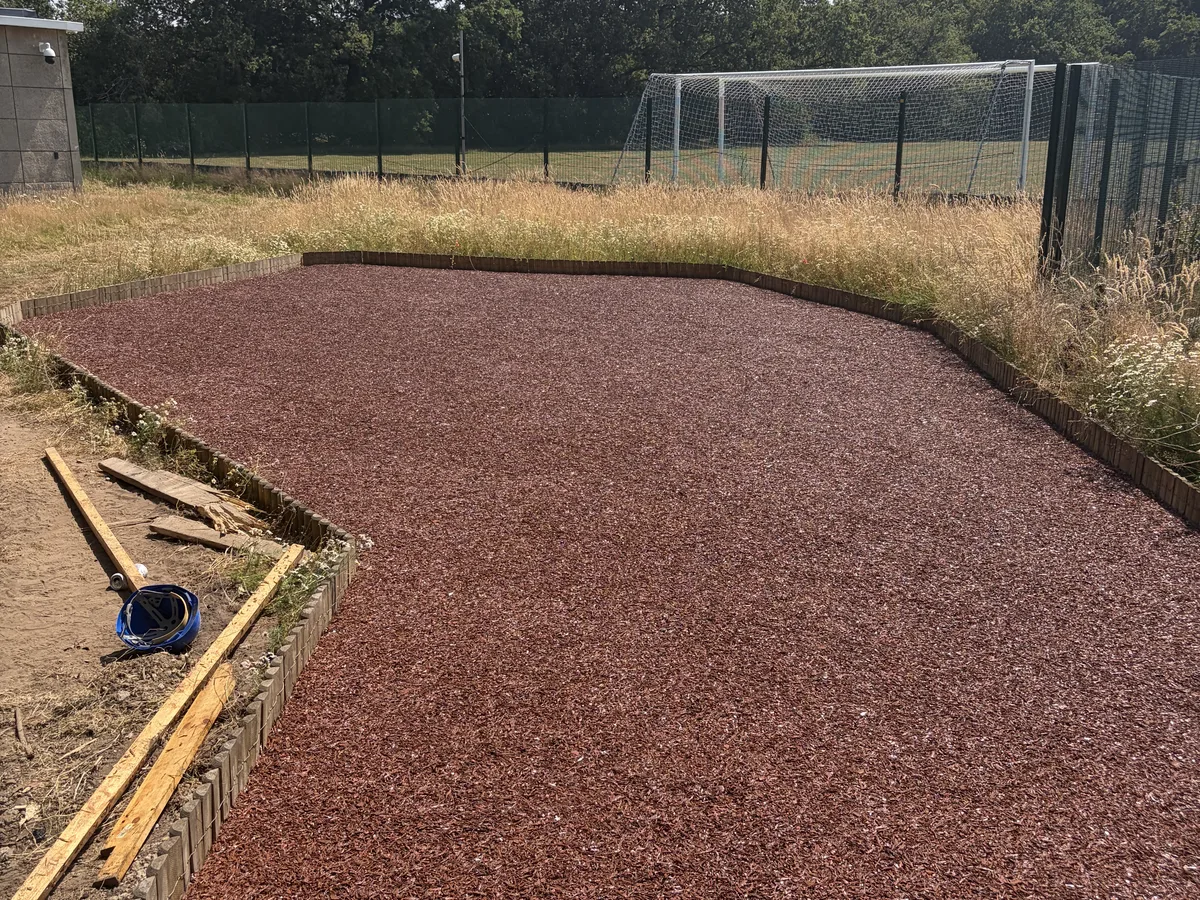
Rubber mulch pathway with a natural bark look, installed by A&P Resin

Rubber mulch

Shredded rubber bound on site to give the look of bark chip without the drawbacks — it does not rot, blow about or need topping up each year. A natural finish that suits woodland trails, tree pits and paths through green space.

Our process

How we lay it

Survey & design

We measure the area, check what the surface sits under, and agree the colours, zones and layout with you.

Base preparation

We excavate and lay a sound, free-draining base with the right edgings — the part that decides how long the surface lasts.

Mix & lay

Rubber and binder are force-mixed on site and hand-trowelled to an even, continuous finish at the agreed depth.

Cure & hand over

The surface cures, we clear the site, and the area is ready for use.

Questions

Rubber surfacing FAQs

What is the difference between EPDM and rubber mulch?
EPDM wet pour is trowelled into a smooth, seamless surface and comes in strong, clean colours — it is what most people picture as a playground surface. Rubber mulch has a looser, chipped texture that looks like bark, so it blends into planting and woodland settings. Both absorb impact and both let water through; the choice is mostly about the look you want.
Is it suitable under play equipment?
Yes — that is what it is for. Both surfaces are laid to a depth suited to the fall height of the equipment they sit beneath, which we work out at the survey based on the kit you have or are installing.
Where can you lay it?
Playgrounds, schools and nurseries, play areas, trim trails, tree pits and paths through public and green space — as well as domestic gardens where children play. It needs a properly prepared, free-draining base, which we form as part of the job.
Does it need much looking after?
Very little. Unlike bark or wood chip there is nothing to rot or top up each season, and it will not blow away or wash into the grass. Keeping it clear of leaves and debris is generally all it asks for.

Ready to transform your driveway?

Get a free, no-obligation guideline estimate today. Final pricing is always confirmed after a site inspection.